Support our Foundation of Myology project

Modulation of the muscle satellite cell pool (MuSC) by GDF5: a potential therapeutic benefit for DMD
Partager sur

Researchers from the Center of Research in Myology* at the Institute have demonstrated the benefits of treatment with growth and differentiation factor 5 (GDF5) in the mdx mouse model of Duchenne muscular dystrophy (DMD).
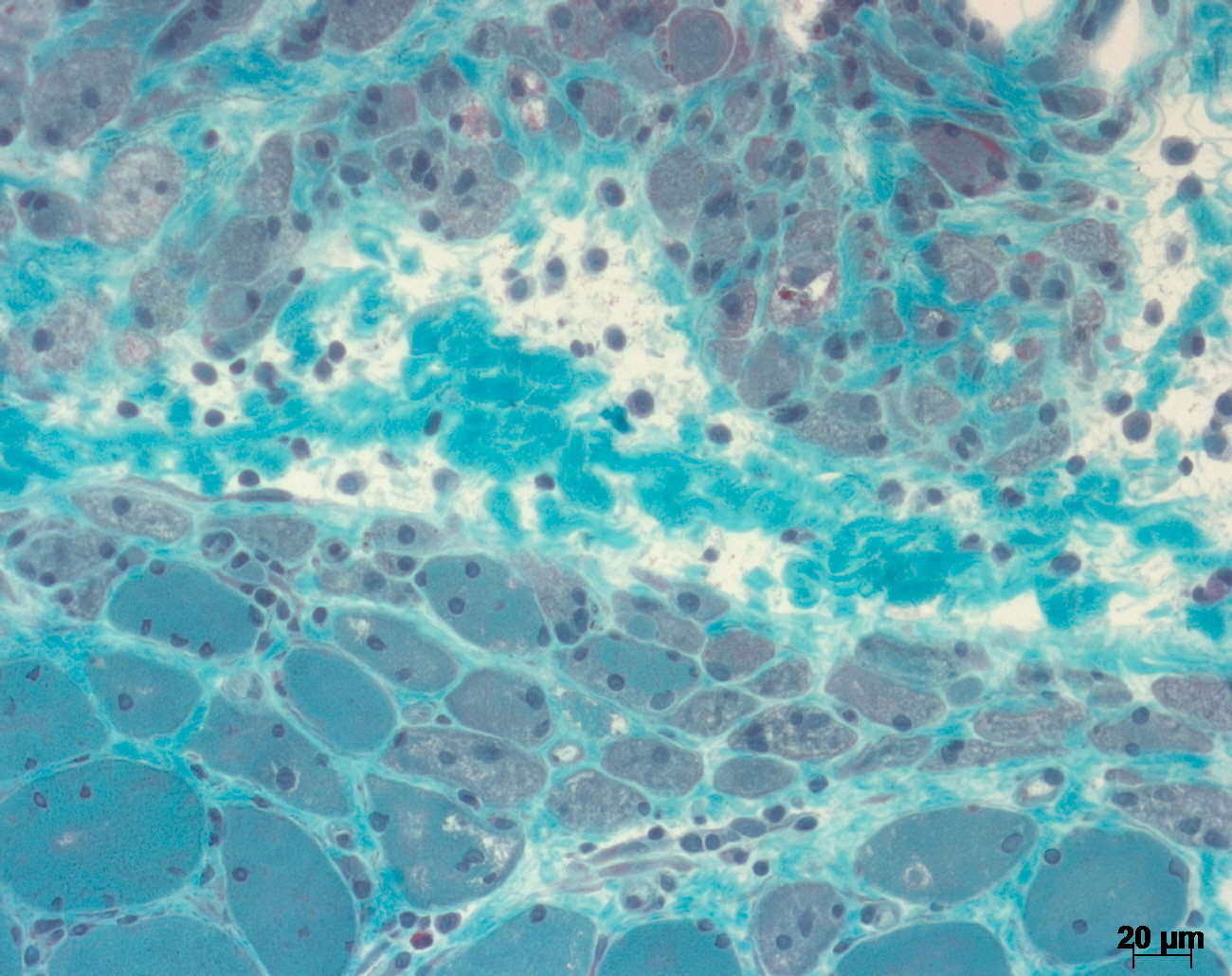
Their work shows that the overexpression of GDF5 in muscle significantly improves its histological organisation, reduces inflammationRéaction non spécifique suscitée par un agent pathogène. and stimulates regenerative capacity, particularly with the formation of new muscle fibres. The researchers have also identified muscle satellite cells (MuSCs) as a major target of GDF5. GDF5 stimulates their proliferation whilst delaying their myogenic differentiation and fusion – processes that are excessive in DMD – thereby helping to maintain the pool of progenitor cells necessary for muscle regeneration.
The combination of GDF5 with microdystrophin gene therapy delivered via an AAV« adeno-associated virus » , ou virus adéno-associé est un petit virus à ADN simple brin. Il fait partie de la famille des Parvoviridae et appartient au genre des Dependovirus. La particule virale est constituée d’un brin d’ADN de polarité positive ou négative protégé par une capside. La taille moyenne d’une particule d’AAV et de 18 à 22 nm. Les AAV sont les seuls parvovirus non autonomes. Lorsqu’on emploie « rAAV » , il s’agit du virus AAV recombinant, c’est-à-dire qu’il a été modifié pour devenir un vecteur (et n’est donc plus virulent). vector is particularly noteworthy, as it further enhances the therapeutic response: it increases the proportion of small fibres expressing microdystrophin compared with gene therapy alone.
These results thus identify GDF5 as a promising modulator of the pathophysiology of DMD and open up a new avenue for optimising gene therapy approaches. They constitute the first demonstration of an additive effect between a GDF5-based intervention and microdystrophin gene therapy using an AAV vector.
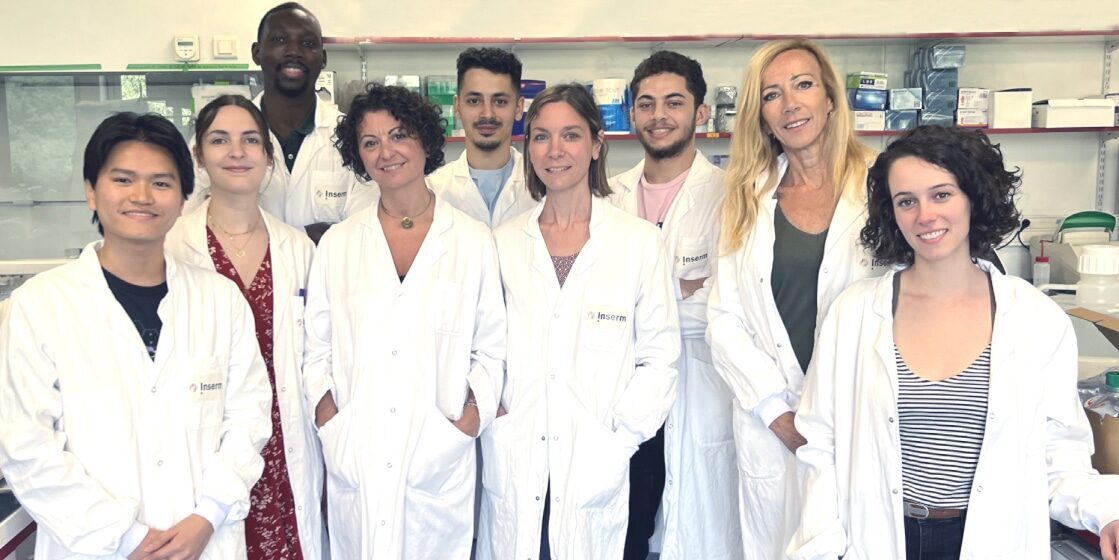
* Maintenance of muscle mass and function, optimising AAV-based gene therapies (MOOVE) team, led by France Pietri-Rouxel in the Center of Research in Myology at the Institute of Myology.