Support our Foundation of Myology project

Flagship projects
When the immune system disrupts muscle

Understanding how inflammation disrupts muscle

The project investigates how the inflammatory environment found in autoimmune myopathies directly influences muscle fibres, beyond the damage caused by the immune system.
Scientific challenge
In myositis, some patients remain very weak even though inflammationRéaction non spécifique suscitée par un agent pathogène. appears to be under control. Others experience muscle fatigue that is out of proportion to the visible damage. These observations suggest that muscle itself may be altered by prolonged exposure to inflammatory signals. Understanding these effects is essential in order to explain persistent sequelae and improve treatments.

Key questions to unravel
The team is working to identify the inflammatory molecules that disrupt muscle metabolism, cellular respiration and repair capacity. The aim is to understand how inflammation brings about lasting changes in the way muscle fibres function, and to identify biomarkers or therapeutic targets able to act directly on muscle.
Scientific and methodological approach
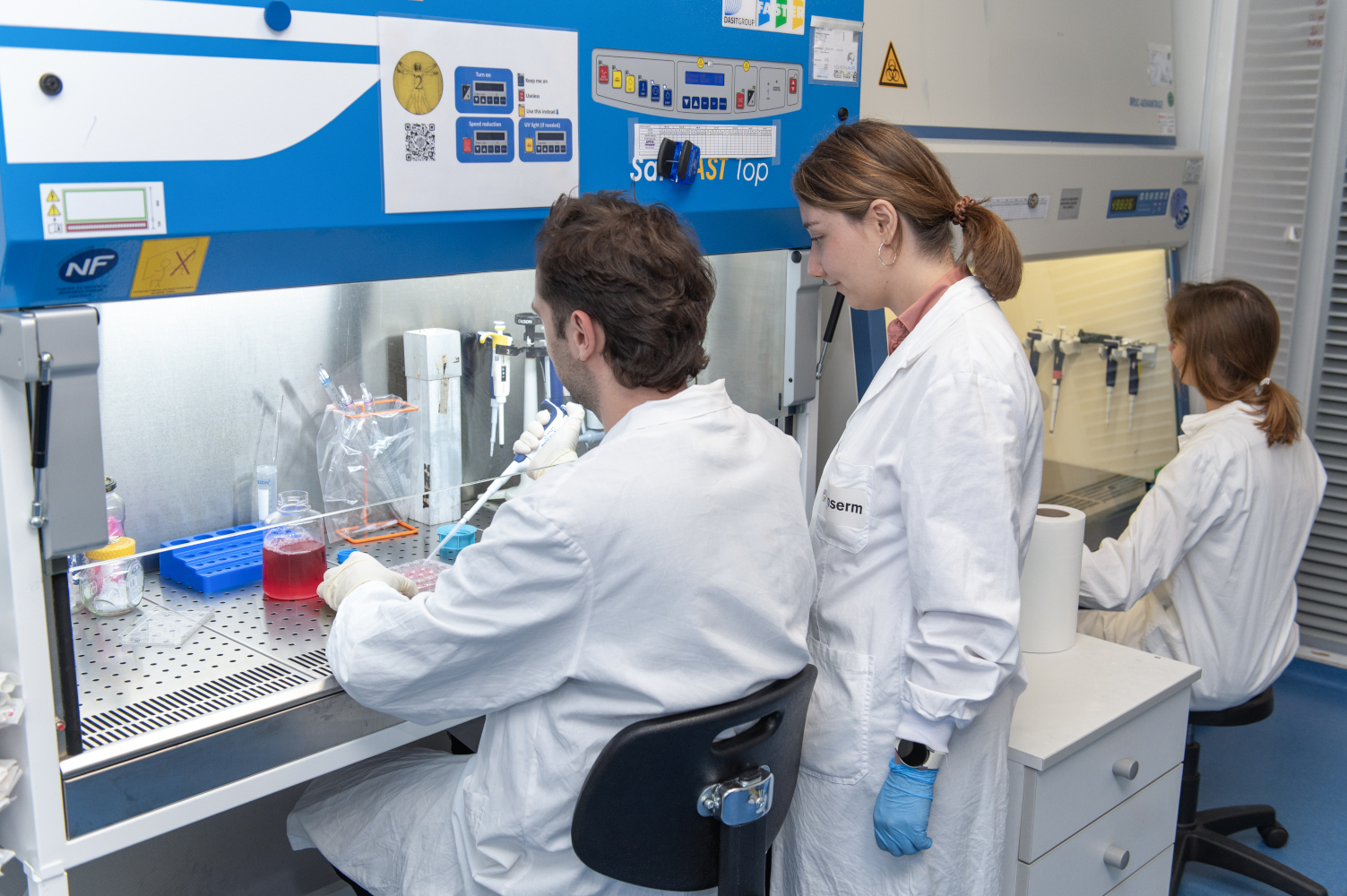
The researchers will analyse biopsies and blood samples from patients in order to pinpoint the cytokines and autoantibodies liable to influence muscle. These hypotheses will then be tested in cell models, to observe precisely how they affect muscle metabolism, regeneration and function.


Autoimmune myopathies are extreme situations in which the immune system interacts with muscle. By understanding how this inflammatory environment alters the way muscle fibres function, we hope to gain a better understanding of other situations in which muscle weakens, such as muscle ageing or the loss of muscle mass seen in some patients with cancer.
Yves Allenbach, PU-PH (professor of medicine and hospital practitioner), co-leader of a research team at the Center of Research in Myology
Expected impact on research and clinical practice
This work could explain why some patients recover poorly even though their inflammation is under control, and open the way to treatments that target muscle alterations directly. The mechanisms under study could also shed light on other situations in which inflammation weakens muscle, such as ageing or certain diseases associated with a loss of muscle mass.