 Nucleus-cytoskeleton coupling in development and disease
Friday 19 June 2026 – 10h30 – Auditorium of the Institute of Myology
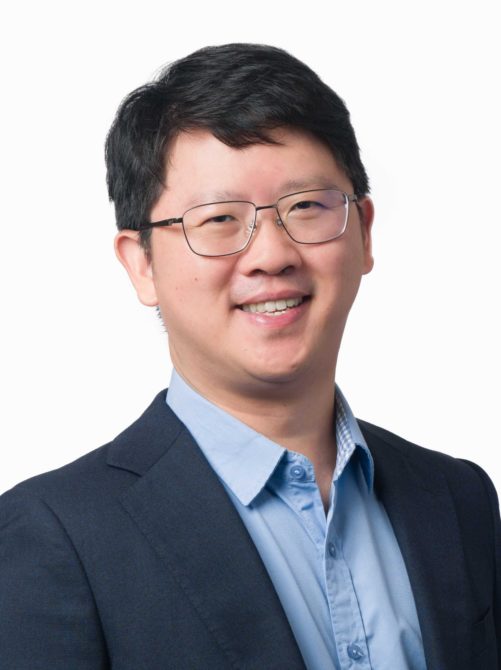
Yin Loon Lee, PhD (Group leader at A*STAR Skin Reseach Labs in Singapore)
Invited by Bruno Cadot, researcher in the Signaling pathways and striated muscles team, head of MyoImage
A few words about the speaker
Yin Loon Lee completed his PhD at Stanford University with Tim Stearns on the nanoscale architecture and function of centriole proteins involved in cilia formation. At Stanford, he collaborated with W.E. Moerner’s lab to use Stimulated Emission Depletion (STED) super-resolution microscopy to characterize the nine-fold symmetric organization of centriole proteins in multi-ciliated tracheal epithelial cells. Yin Loon then joined Brian Burke’s laboratory at the Institute of Medical Biology in A*STAR, Singapore, to unravel the role of the Linker of Nucleoskeleton and Cytoskeleton complex in a variety of cellular, developmental and disease contexts. With Brian, Colin Stewart, and others, Yin Loon co-founded Nuevocor, a spinoff biotech company that in-licensed A*STAR technology to develop a cardiac gene therapy for LMNA dilated cardiomyopathy. Currently, Yin Loon’s research group in the A*STAR Skin Research Labs focuses on the role of nuclear mechanotransduction in homeostasis and disease, in skin and other organs.
The intervention
Tissues throughout the body experience constant mechanical stress – muscles contract, lungs expand during respiration, and the skin gets abraded. At the cellular level, beyond housing the genome, the nucleus also functions as a mechanotransduction hub, in part through the Linker of Nucleoskeleton and Cytoskeleton (LINC) complex. LINC complexes consist of inner nuclear membrane SUN proteins that bind outer nuclear membrane KASH proteins in the perinuclear space. SUN proteins interact with the nuclear lamina, including lamin A/C (LMNA), and KASH proteins interact with the cytoskeleton, enabling the LINC complex to mechanically couple the nucleus to the cytoskeleton and the extracellular environment.
The combinatorial interaction of two SUN and six KASH proteins lead to more than a dozen different LINC complexes, with alternative splicing further expanding their diversity. We have examined specific LINC complex genes and isoforms in a variety of biological contexts. This includes the function of the striated muscle-specific Nesprin-1α isoform in microtubule organization and nuclear positioning in muscle development. This led to dissecting the function of Sun1 and Nesprin-1 in transmitting microtubule forces to drive pathology in LMNA-associated muscular dystrophy and cardiomyopathy. More recently, we have begun to examine the role of Sun2 in fibrosis, including in TGFb-mediated pro-fibrotic signalling.
By focusing on the role of specific LINC complexes, we aim to elucidate novel biology and understand pathology in mechanosensitive diseases.
Auditorium of the Institut of Myology
Bat Babinski
La Pitié Salpêtrière Hospital
Entrance via 50/52 boulevard Vincent Auriol
75013 Paris