 Head: Andrew Ho, PhD
AVATAR is an innovative platform led by researcher Andrew Ho that designs miniature human muscle-on-a-chip models, grown from patient cells. At the intersection of bioengineering, muscle biology and computational modeling, this models make it possible to study muscle function in unprecedented detail and to evaluate therapeutic strategies with far greater accuracy.
AVATAR brings together multiple cell types (neurons, vascular cells, immune cells, etc.) within a miniaturised circulation system (microfluidics) that recreates a dynamic of muscle tissue in vivo.
Cultured in 3D and supported by a controlled flow of nutrients, these tissue contructs can be monitored non-invasively and in real time, generating functional data that researchers and clinicians can act upon.
Our Technology
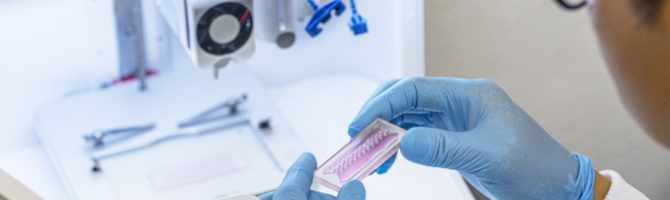
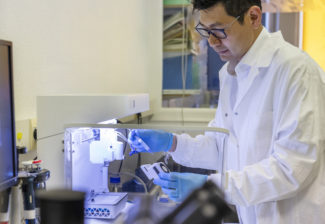
AVATAR is built on a biofoundry-inspired workflow—design → build → test → learn—ensuring ideas move seamlessly from concept to prototype to reproducible experimentation. The platform combines custom-designed microfluidic chambers fabricated in-house using high-resolution DLP printing; micropatterned hydrogels that guide fiber alignment and maturation; 3D bioprinting to place cells and matrices with precision; and proprietary bioinks functionalized with matrix proteins tailored to muscle biology and address specific project needs.
This end-to-end approach accelerates research while reducing reliance on animal models. It enables scientists to test compounds under controlled flow, track force, fatigue, and recovery, explore metabolic pathways and organ-to-organ interactions, and investigate safety and mechanism of action. By making microfluidics the core of the device, AVATAR delivers miniaturisation, integration and measurement precision: more information, faster, with less material.
Impacts
AVATAR is built to address the questions where muscle function matching physiological condition is central. The platform supports drug discovery in physiologically relevant conditions, where compounds are tested on three-dimensional tissues exposed to controlled flow. It enables detailed functional assessments, capturing contraction strength, fatigue, and recovery in real time.
By using human cells, including those from patients, AVATAR bridges the gap between research and clinical practice. Early detection of relevant signals makes it a sensitive tool for guiding therapeutic choices and paving the way for more personalised medicine.
By linking modules – such as liver, vasculature, or neurons to muscle – AVATAR paves the way for the study of metabolism and organ-to-organ communication, in a way that mirrors the complexity of the human body. It also provides a powerful tool for safety evaluation and mechanism-of-action studies, delivering sensitive early readouts that can guide decision-making.
Our R&D Programs and Solutions
To ensure the platform remains at the forefront of innovation, our roadmap adopts a biofoundry approach: standardized modules, scalable analytical tools, and rapid cycles of development, in order to ensure the robustness and adaptability of the results.
Our current R&D efforts focus on three key areas:
- Real-time functional monitoring — non-invasive measurement of electro-mechanical activity, including contraction patterns, to track muscle performance continuously.
- AI-enabled analytics — algorithms trained on long-term datasets to detect drug-specific signatures and to forecast trajectories under different therapeutic scenarios.
- Advanced materials toolkit — next-generation bioinks, tunable matrices, and bioorthogonal surface chemistries that enable precise functionalization and long-term biological stability.
The goal is to establish a versatile, future-ready platform that supports studies ranging from early discovery to advanced maturation models. With an official launch planned for 2028, we welcome collaborations with biotech and pharmaceutical companies looking to de-risk pipelines, clinical centers exploring patient-specific testing, and academic teams addressing mechanistic questions where both structure and function are critical.
Team members
Andrew Ho, PhD – Principal Investigator
Sonia Pezet – Engineer
Massiré Traore – Research Engineer
Contact