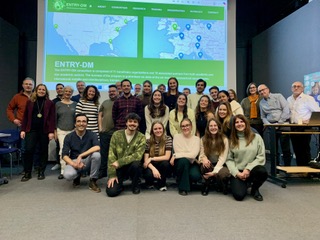
 The ENTRY-DM doctoral network (Interdisciplinary doctoral training on oligonucleotide-based therapies for myotonic dystrophy) officially launched in March 2025, and the 14 international doctoral students recruited began their thesis projects in autumn 2025.
In this context, the network’s first global meeting, the Network-Wide Event (NWE), was held in Paris from 26 to 30 January 2026, marking the scientific and human launch of this ambitious European doctoral programme, funded by the European Union’s Marie Skłodowska-Curie Actions, and the beginning of a great collective human adventure.
 A European network of 14 young researchers
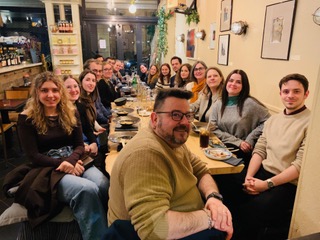
On this occasion, the 14 doctoral students in the network met in person for the first time. Coming from ten European and international countries (France, Italy, Spain, Greece, Serbia, Germany, Portugal, Russia, Brazil and India), they represent a wide variety of backgrounds and specialities, ranging from molecular and cellular biology to neurobiology, muscle physiopathology, nucleic acid chemistry, bioinformatics, neuropsychology, and translational and clinical research. They all share a common goal: to better understand the mechanisms of myotonic dystrophy (MD) and contribute to the development of new therapeutic approaches through the high international mobility of young researchers and integrated, interdisciplinary and cross-sectoral training, combining academic and clinical research with interactions with non-academic stakeholders.
A week of intensive training in Paris
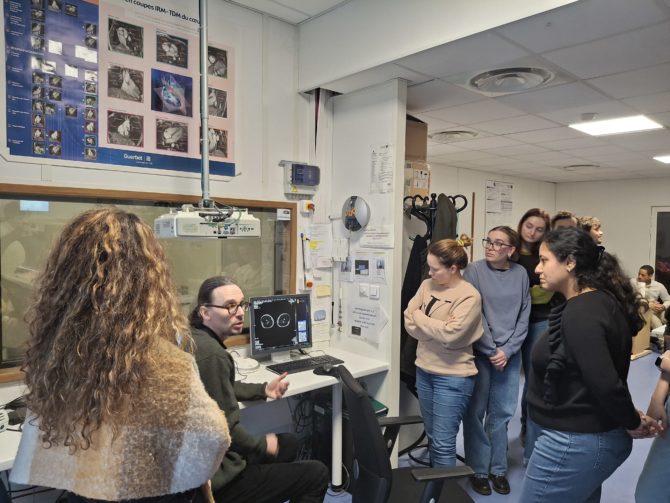
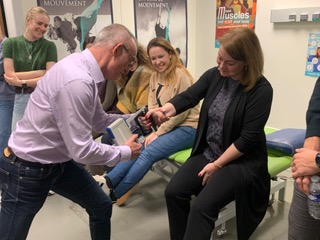
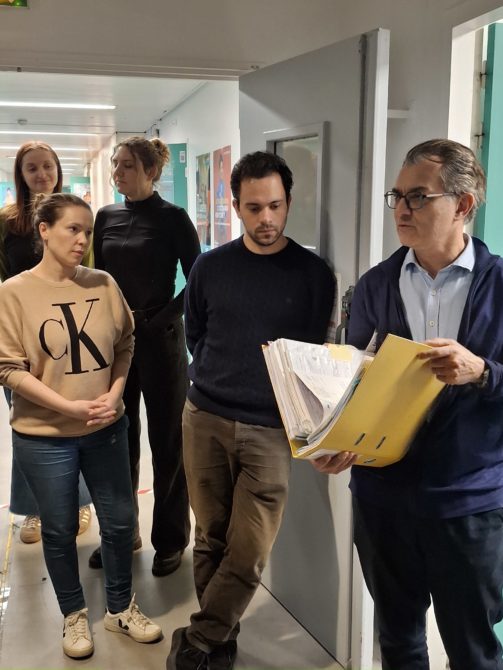
The ‘Paris week’ took place at Sorbonne University and the Institute of Myology, combining lectures, seminars, scientific exchanges and networking opportunities. The programme covered a wide range of topics: the clinical setting of MD, the cognitive and emotional aspects of the disease, its genetics and pathophysiological mechanisms, new sequencing approaches, animal and cellular models, the use of human pluripotent stem cells, muscle-on-chip platforms, as well as oligonucleotide therapies and clinical trials. The doctoral students also presented their thesis projects and participated in cross-disciplinary training (stress management and promoting well-being during the thesis). They visited the Institute of Myology and took part in networking activities that encouraged informal exchanges between peers, supervisors and partners in a relaxed setting conducive to dialogue, made possible by long-standing collaborations and strong cohesion between the network’s supervisory teams from six European countries.
 A key moment for network cohesion
Beyond the scientific content, this first meeting was a key moment for collective development. For doctoral students, it provided an opportunity to position themselves within a European network, better understand the complementary nature of the projects and initiate initial collaborations. For supervisors and partners, it was an opportunity to meet a particularly motivated, curious and committed cohort, and to lay the foundations for coordinated and supportive supervision across the network.
An opening towards patients and the non-academic world
The week was also marked by the presence of Tanya Stevenson, CEO of the Myotonic Dystrophy Foundation (MDF, USA), as well as other members of the non-academic advisory board: Alain Geille (AFM-Téléthon), Beatriz Llamusi (Arthex) and Ricardo Mondragón (Sanofi). Their participation served as a reminder of the importance of anchoring research in the realities and expectations of patients and their families, and of maintaining constant dialogue between academic research, patient associations and industrial partners.
 Conclusion from coordinator Mario-Gomes Pereira, researcher at the Centre for Research in Myology
“This first week perfectly illustrated the spirit of the ENTRY-DM network: demanding scientific training, but also a human adventure. Seeing these young researchers freely exchange ideas, ask relevant questions and already imagine cross-disciplinary collaborations confirms that we have brought together an exceptional cohort. The network is up and running, and the collective energy is there!”
What’s next?
The coming months will be punctuated by a series of online training courses dedicated to essential cross-disciplinary themes: scientific integrity, gender equality and inclusion, open science, bioinformatics, scientific communication and entrepreneurship.
The network’s next major event will be the second Network-Wide Event, scheduled for early 2027 in Valencia (Spain), in conjunction with an international conference on oligonucleotide therapies, thus offering a direct opening to the international scientific and industrial community.
For more information about the network, visit the website: www.entry-dm.eu