
 Head of consultation : Prof. Marcela Gargiulo, PhD
Our team has long-standing expertise in supporting patients with neuromuscular disorders (NMD) and their families. We offer psychological assessment and follow-up consultations to help patients at different stages in the course of their illness. We have also set up discussion groups for young adults with neuromuscular disorders, patients with autoimmune myasthenia and a cognitive remediation group for DM1 patients. Besides, we take part in continuing education activities to pass on our expertise in the psychological and neuropsychological aspects of MNM.
Key projects
- DM1: gain in earliness and rapidity
A European consortium in which the team participates has validated a shortened version of the WAIS-4 (Wechsler Adult Intelligence Scale- Fourth Edition), a scale for assessing the global cognitive abilities of adults. The shortened version proved to be specific to disorders that appear early in adults with Steinert disease (DM1). It is also much quicker to test: 15 to 20 minutes compared with 1.5 hour for the WAIS-4. The abbreviated version will therefore enable these disorders to be detected earlier, while WAIS-4 will be used at a later stage for a more detailed assessment and to monitor the patient’s progress.
- Delicate navigation between social information
Some patients with DM1 have problems with social cognition. A study carried out on patients being monitored at the Institute of Myology has just shown that this phenomenon is linked to difficulty in navigating between social information – different protagonists, different facial expressions, etc. – and articulating them with each other. – and to articulate them with each other. In a way, it is as if patients lacked the fluidity to move from one piece of a jigsaw puzzle to another and the flexibility to put them together. Imaging has shown that two networks of neurons may be involved, under the frontal lobe and in the hippocampus. This multidisciplinary work was carried out by the Psychology and Neuropsychology team, the Neuro-Myology Department, the Institut du Cerveau (ICM) and the Institut de la mémoire et de la maladie d’Alzheimer (IM2A).
- A serious game to improve social interactions
A serious game could help children with DM1 to improve their social interaction. Using virtual reality, young people (aged 6 to 16) take part, via their avatar, in social scenarios close to their daily lives – the school playground, a holiday camp, etc. – which will provoke behaviour and emotions in the other characters in the game. – which will provoke behaviour and emotions in the other characters in the game. The forthcoming study will assess whether this game helps young people to better understand similar situations in real life. It will also check whether the tool can help neuropsychologists understand how children ‘think’. This multi-site trial, promoted by the Institut de Myologie, is supported by the Fondation Maladies Rares.
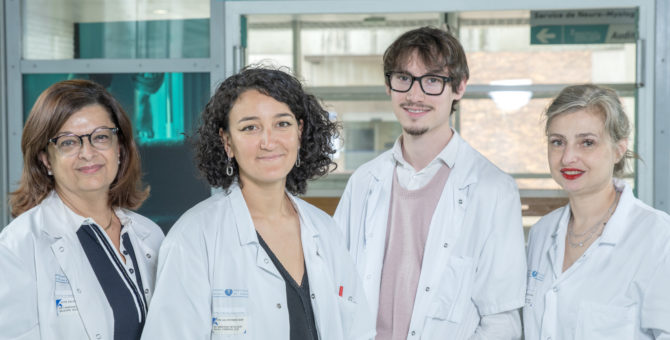
Consultation team
Prof. Marcela Gargiulo, PhD, Clinical Psychologist, PU in Psychology, Université Paris Cité, Institute of Myology, Paris
Dr Nathalie Angeard, PhD, MCU-HDR, Neuropsychologist, Université Paris Cité, Institute of Myology, Paris
Sabrina Sayah, Clinical Psychologist specialising in neuropsychology
Véronique Vicaire, Psychologist
Dr Bettina Beaujard, PhD, Clinical Psychologist
Elysa Jacob, Clinical Psychologist specialising in neuropsychology
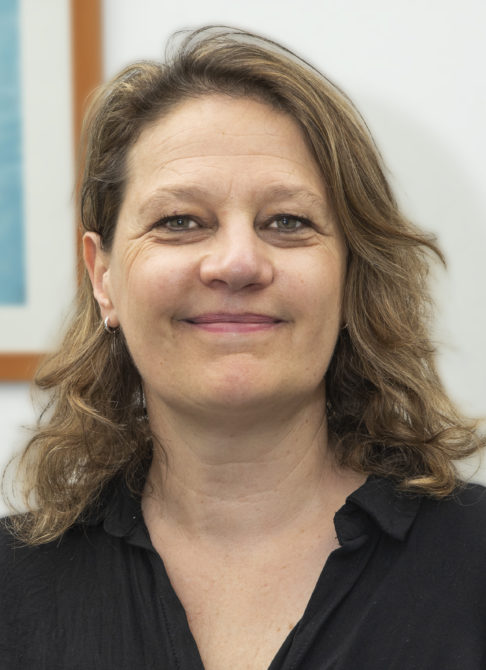 Head of research: Prof. Marcela Gargiulo et Dr Nathalie Angeard
The team’s research focuses on two areas: human and social sciences (SHS) and neuropsychology.
In SHS, the team focuses on the psychosocial impact of neuromuscular diseases on patients and their families.
In neuropsychology, the team studies neurocognitive and socio-emotional disorders in paediatric and/or adult neuromuscular diseases, and the impact of early neurogenetic vulnerabilities on the developmental trajectory of long-maturing cognitive functions (executive functions, social cognition, memory).
Key projects
- Parenting and SMA
In the case of children with SMA, we can expect the parenting procesś to be disrupted, particularly with regard to the experience and practice of parenthood, due to the disruption of emotional and educational reference points in the parent-child relationship when the child has a serious illness and disability.
- Announcement of a neuromuscular disease in adulthood (AMNA)
Study of the intersubjective dynamic (doctor-patient) during the announcement consultation.
- Informing children about genetic risk (RISQUINFO)
Comparative study of : 1) the particularities of information between parents and children in families affected by dominant neurogenetic and neuromuscular diseases. 2) Determine whether or not access to prenatal/preimplantation diagnosis is a determining factor in informing children at risk; 3) Find out people’s wishes and expectations regarding the dissemination of information on genetic risk; 4) Investigate the impact of the law on medical practices, in particular whether prenatal/preimplantation diagnosis is regarded by clinicians as a ‘preventive measure’.
- Decision-making in a context of prenatal uncertainty (ACCED)
In collaboration with the genetics department at Pitié-Salpêtrière and the neuropaediatrics and maternity departments at Trousseau. The research studies couples’ decision-making when an Isolated Corpus Callosum Anomaly (ACCED) is identified in their foetus/baby and they are faced with the choice of continuing or terminating the pregnancy. The aim of the study is to understand how couples perceive uncertainty, how they make their decision and the effects of this decision over time, with a view to adjusting healthcare practices to the needs of these couples. The results of this study will have a high degree of transferability to other rare diseases where the phenotype is uncertain.
Research team
Humanities and Social Sciences: Pr Marcela Gargiulo, PhD, Clinical Psychologist, PU in psychology, Université Paris Cité
Neuropsychology: Dr Nathalie Angeard, PhD, MCU-HDR, Neuropsychologist, AFM-Téléthon
Bettina Beaujard, PhD, Clinical Psychologist
Sophie Boursange, PhD Student
Filippia Doulou, PhD Student
Marion Mollard Droin, PhD Student
Last publications
- Misdrahi, S., Louët, E., Gargiulo, M., & De Luca, M. (2025). Le trouble neurologique fonctionnel : Une élaboration de l’atteinte traumatique ? European Journal of Trauma & Dissociation, X(X) ,
- Beaujard, B., Béhin, A., Gargiulo, M., & Castillo, M. C. (2024). Revue semi-systématique de la littérature sur l’annonce d’une maladie neuromusculaire à l’âge adulte. L’Évolution Psychiatrique. 90, (4), 700-715
- Gargiulo, M. (2025). Le nid vide. Dans Sous la direction de A. Boissel A. Hourcade.Un lieu à soi : habiter avec un handicap (p. 69-82). Erès.
- Géraud-Compain, E. & Gargiulo, M.(2025). Chapitre 5. Le temps d’une visite d’un enfant à son parent hospitalisé en hématologie. Dans K. Schwering et A. Laurent Psychologue à l’hôpital : Un métier aux multiples facettes (p. 75-96). In Press.
- Gargiulo M., De Luca M., Dispositifs thérapeutique : éthique, recherche clinique, Eres.
- Doulou, F., Piolino, P., & Angeard, N. (2025). A narrative review of virtual reality programs targeting executive functions and social cognition evaluation and/or rehabilitation in children with ADHD or ASD. Front Psychol. 2025 Nov 5;16:1583052. doi: 10.3389/fpsyg.2025.1583052.
- Gaudet, I., Gagnon, S.P., Hamel, S., Gilbert, N., Doulou, F., Gagnon, C., Angeard, N. Neuropsychological and behavioral outcomes in childhood-onset myotonic dystrophy type 1 through lifespan: a scoping review. Neuromuscul Disord. 2025 Nov;56-57:106263. doi: 10.1016/j.nmd.2025.106263.
- Beaujard, B., Béhin, A., Gargiulo, M., & Castillo, M. C. (2024). Revue semi-systématique de la littérature sur l’annonce d’une maladie neuromusculaire à l’âge adulte. L’Évolution Psychiatrique
- Dayan, C., Joselin, L., Huerta, V. C., Gabriel, E., Hennessy, J., Nsongou, H. N., Gargiulo M. & Scelles, R. (2024). Relations entre pairs chez de jeunes enfants en situation de handicap: résultats d’une recherche. Neuropsychiatrie de l’Enfance et de l’Adolescence, 72(5), 199-207
- Laberge, L., Maltais, A., Gallais, B., Turcotte, O., Angeard, N., Savinsky, Y., & Gagnon, C. (2024). Évaluation du rythme veille-sommeil chez des adultes avec la forme infantile de la dystrophie myotonique de type 1: une étude en actimétrie. Médecine du Sommeil, 21(1), 64-65
- Viora-Dupont E, Robert F, N, Gargiulo M, Peyron C, Binquet C, Faivre L. Expectations, needs and mid-term outcomes in people accessing to secondary findings from ES: 1st French mixed study (FIND Study). Eur J Hum Genet. 2024 Sep;32(9):1166-1183. doi: 10.1038/s41431-024-01616-9.
- Louët, E., Misdrahi, S., Gargiulo, M*. & de Luca, M. (2024). La projection dans la conversion hystérique. Psychologie clinique et projective, 33, 29-49.
- Droin-Mollard, M., Moutard, M.-L., Gargiulo, M., Missonnier, S. et Héron, D. (2024). Vulnérabilité postnatale liée à une incertitude prénatale : exemple des anomalies du corps calleux. Contraste, 60(2), 139-153.
- Ditte, S. (2024). Surdité et inclusion : Où en est-on ?. Entretien avec M. Gargiulo. 59, 179-197.
- Gargiulo, M. & Mandel, J. (2024). Maladies rares : L’apport des recherches en sciences humaines et sociales. Érès.